Intercom’s Fin AI Agent charges $0.99 for every resolution it closes, with no included volume. A store running a sale that drives 1,500 extra conversations in a month adds $1,485 to the bill before counting seats. Essential starts at $29 a seat a month billed annually, or $39 month to month, and climbs to $132 on Expert. Intercom’s plans don’t show a shopper’s order or refund inside the conversation either, so an ecommerce team keeps a second tab open regardless.
The best Intercom alternatives for ecommerce in 2026 are: 1) ThriveDesk, for growing WooCommerce and SureCart stores; 2) Gorgias, for Shopify order support; 3) Tidio, for chat-first ecommerce stores; 4) Freshdesk, for structured ticketing at a lower price; 5) Help Scout, for simple email support; and 6) Zendesk, for enterprise reporting and scale.
We compared each option on store-platform fit, order and billing context, self-service, AI charges, migration effort, and how the bill moves during a peak sales month. Every price below was checked on the vendor’s pricing page in August 2026.
What Intercom does well, and where it hurts
Intercom set the template for in-app messaging in SaaS: a chat widget, behavioral targeting, product tours, and now Fin, its AI agent. Over 3,000 reviewers on G2 rate it 4.5 out of 5. The common thread across those reviews: the product itself is excellent, and the pricing model is the part people warn each other about before a renewal.
Top features
- A conversational inbox with more automation and targeting than most help desks attempt.
- Fin AI Agent, which resolves common questions on its own, billed at $0.99 per outcome.
- Product tours, surveys and outbound messages inside the same tool.
- Copilot for agents at $29 a seat a month annual, $35 monthly.
- An early-stage startup program that cuts the first year’s bill by 93%.
Pricing
Essential is $29 a seat a month billed annually, or $39 month to month. Advanced is $85, Expert is $132. Fin AI Agent has no included volume: every resolution costs $0.99, and a qualification outcome bills $9.99. Copilot adds $29 a seat a month annual, $35 monthly. There’s a 14-day trial and no free plan.
Why ecommerce teams look elsewhere
- The AI meter has no ceiling. Fin resolves questions well, but every outcome costs $0.99 with no included volume, so a sale that drives more chats also drives up the invoice.
- Copilot and Fin add up fast. Seats are just the entry price; add both AI products and a channel or two, and the invoice looks nothing like the number on the pricing page.
- The startup discount is generous, then it isn’t. A 93% cut in year one is real, but most teams see the full price for the first time at renewal, once seasonal volume has already grown into the product.
- The interface is polished, but setup isn’t self-serve. Behavioral targeting and product tours reward teams with a properly resourced onboarding, which isn’t every store.
- Messaging is the whole idea, and it shows. There’s no native order or subscription view inside the conversation, so an agent still needs a second tab to check a purchase or a refund.
Quick comparison of Intercom alternatives for ecommerce
The table uses each vendor’s cheapest relevant paid plan. Pricing units differ, so compare your real seat count and peak-season volume rather than the starting number alone.
| Tool | Core strength | Starting price | Best for | Main trade-off | G2 rating |
|---|---|---|---|---|---|
| ThriveDesk | Store-aware help desk; Neo AI agent in every plan, no per-resolution fee | $29 a month, flat | Growing WooCommerce and SureCart stores | No native voice channel | 4.9 |
| Gorgias | Shopify order actions inside tickets | $10 a month for 50 tickets | Shopify-first stores | Ticket and AI usage charges | 4.6 |
| Tidio | Storefront chat and chatbot automation | $24.17 a month | Small chat-first stores | Lighter ticket operations | 4.6 |
| Freshdesk | Structured ticketing and SLAs | $19 an agent a month, annual | Growing teams needing more process | Chat and Copilot cost separately | 4.4 |
| Help Scout | Simple email-first shared inbox | $25 a user a month | Lean email support teams | Limited ecommerce actions | 4.4 |
| Zendesk | Enterprise reporting and scale | $19 an agent a month | Complex multibrand operations | Per-agent cost climbs fast | 4.3 |
How we evaluated
We evaluated each product as a lean ecommerce team would. The tool had to turn storefront questions into owned work, support self-service, and remain manageable without a full-time administrator. We also checked store-platform fit, what survives an Intercom migration, and how each pricing model behaves during a peak sales month, since per-seat, per-agent and per-resolution pricing move very differently once volume spikes.
Migration scored more than the presence of an importer: we looked at what happens to tags, contacts and conversation history. A low starting price means little if every new seat, ticket or AI resolution adds another charge, or if the switch creates weeks of cleanup during a busy season. Where a vendor’s page and a third-party write-up disagreed, we went with the vendor. Where a price wasn’t public, we said so instead of guessing.
1. ThriveDesk: help desk and live chat for growing ecommerce teams
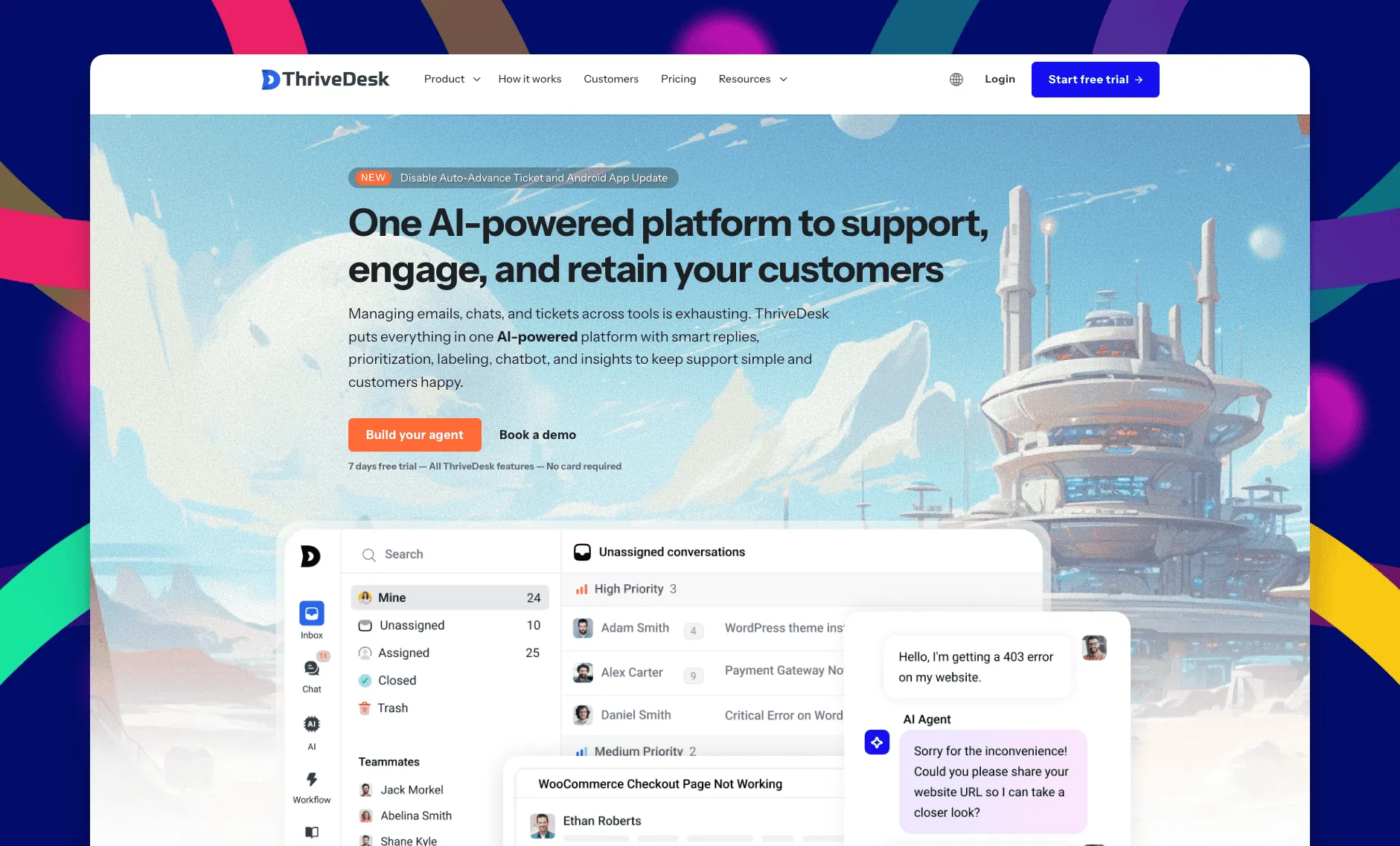
ThriveDesk is AI customer service software for ecommerce: an agentic omnichannel helpdesk, intelligent chatbot, modern help center and powerful reporting, plus Neo, the AI agent that answers customers around the clock. It’s built for small support teams at online stores and SaaS companies that want Intercom’s chat experience without metering every AI resolution, and it prices the whole thing per plan rather than per seat or per outcome. Here’s what each part does.
A shared inbox with clear ownership
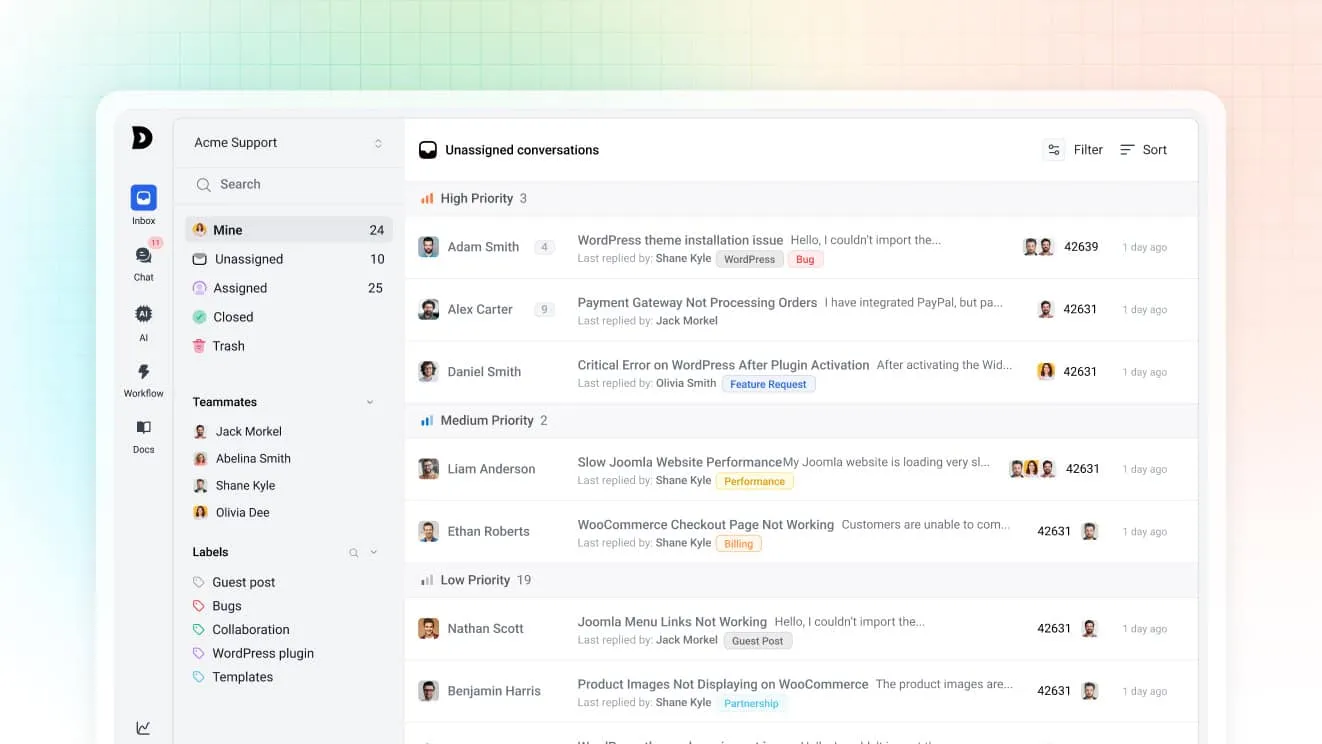
Email, chat and the contact form land in one queue, and the team works it together. Collision detection shows who’s already replying, so two people never answer the same customer. Assignment rules route by tag, subject or priority, saved replies keep the common answers consistent, and custom views give each agent a filtered inbox by status, tag or assignee. That structure holds up during a seasonal peak: managers can separate delivery issues and refund questions into their own views, then add extra teammates without redesigning the queue.
Neo handles repeat store questions, with no per-resolution meter
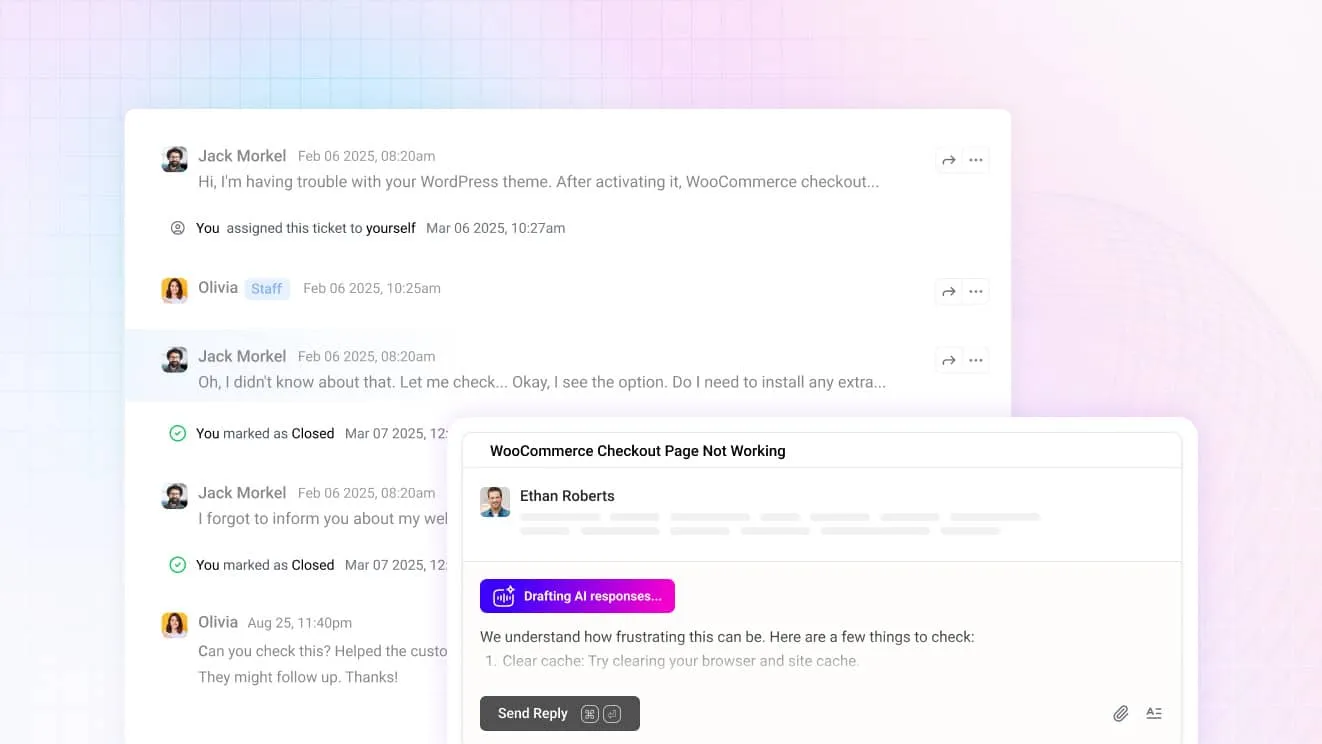
Neo is the AI agent on every plan, at no extra charge per resolution. It answers the common questions on its own, so the queue only holds the ones that need a person. For your team, Copilot drafts replies you can send or edit, summarizes a long thread before you read it, and rewrites a message to be shorter or friendlier. Workflow rules handle the tagging, routing and follow-ups around it.
One widget for chat, forms, orders and articles
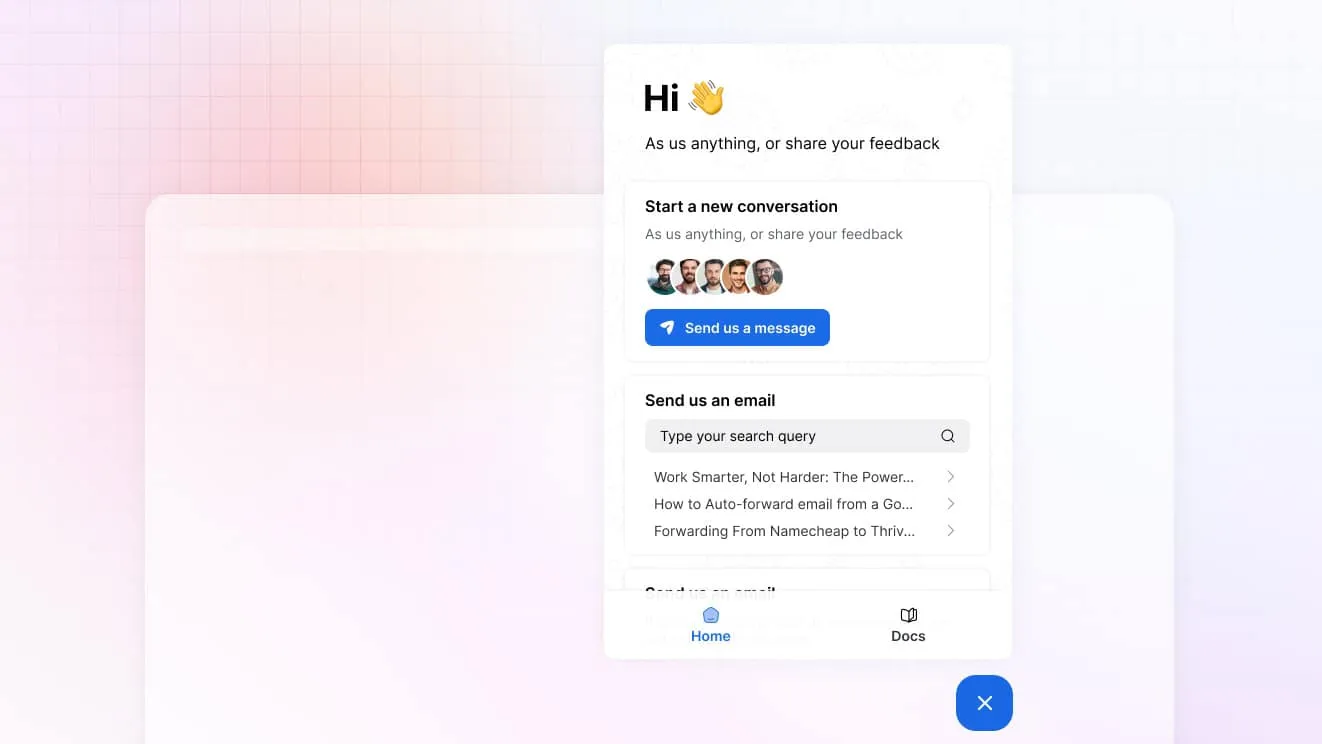
The chat widget does what Intercom’s Messenger does, and more. Customers can chat with Neo or a person, send a message through the contact form, look up an order without asking anyone, and search the help center, all from the same bubble. It sits on the same site as the store, so a shopper never has to leave the page to get an answer.
Store and billing data inside the conversation
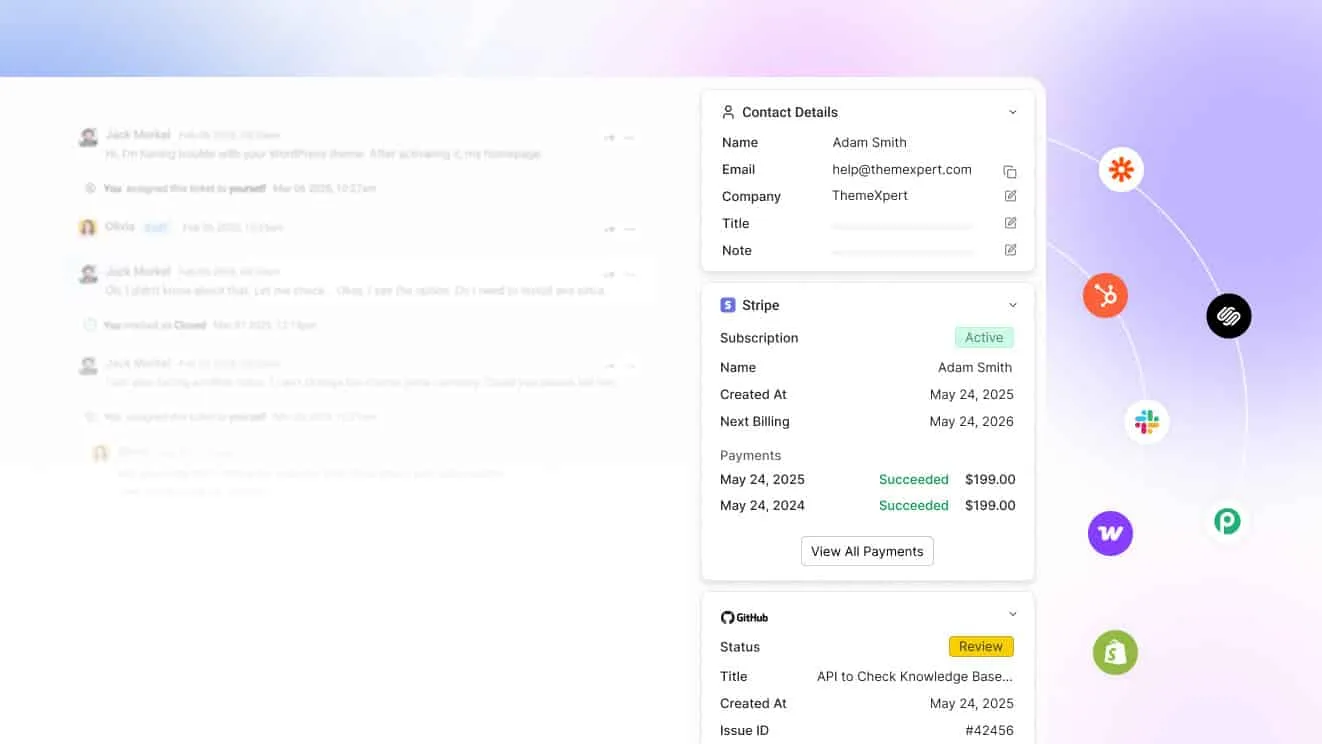
Connect WooCommerce, Shopify, SureCart, Stripe or Paddle and the customer’s orders, subscriptions and payments show next to the message, something a messaging-first design doesn’t attempt. Agents can update an order or check a refund from the reply instead of opening another tab. Neo can answer a status question on its own once the order is connected.
A help center that takes questions off the queue
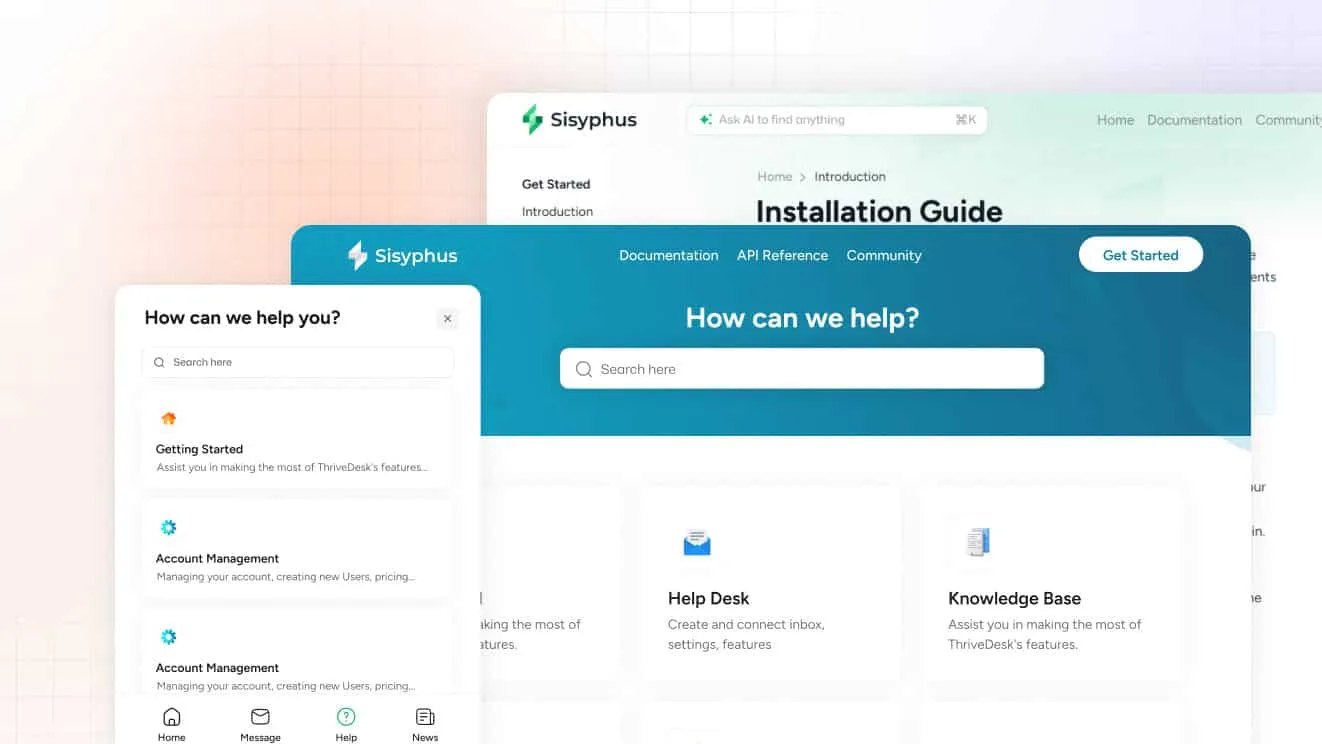
The help center is a knowledge base with a block editor, AI help for first drafts, and AI search that works inside the widget too. The article count grows and the resolution bill doesn’t. Categories keep shipping times, return policy and product documentation in separate sections without splitting the workspace in two.
What it costs
Basic is $29 a month for 2 teammates and 1 inbox, Standard is $69 for 5 teammates and 2 inboxes, and Unlimited is $129 for unlimited teammates and 5 inboxes. Annual billing takes those to $19, $49 and $99. Neo is included on every plan with no per-resolution charge, and there are no per-seat add-ons to budget for later. The trial is 7 days, no card required.
Why ecommerce teams evaluate ThriveDesk against Intercom
- The AI doesn’t meter you. Neo answers customers and Copilot drafts and summarizes for agents on every plan, with none of Fin’s $0.99-per-outcome math to project before a sale.
- The bill is the bill. Three flat plans, no per-seat creep once you add a seasonal hire, and unlimited teammates on the top plan.
- Setup doesn’t need a training program. The shared inbox, widget and help center work the way they look, without a series of onboarding calls to get there.
- The order is part of the reply. Store and billing data sit next to the message instead of in a separate app, which a messaging-only tool never had a reason to build.
2. Gorgias: best for Shopify order support
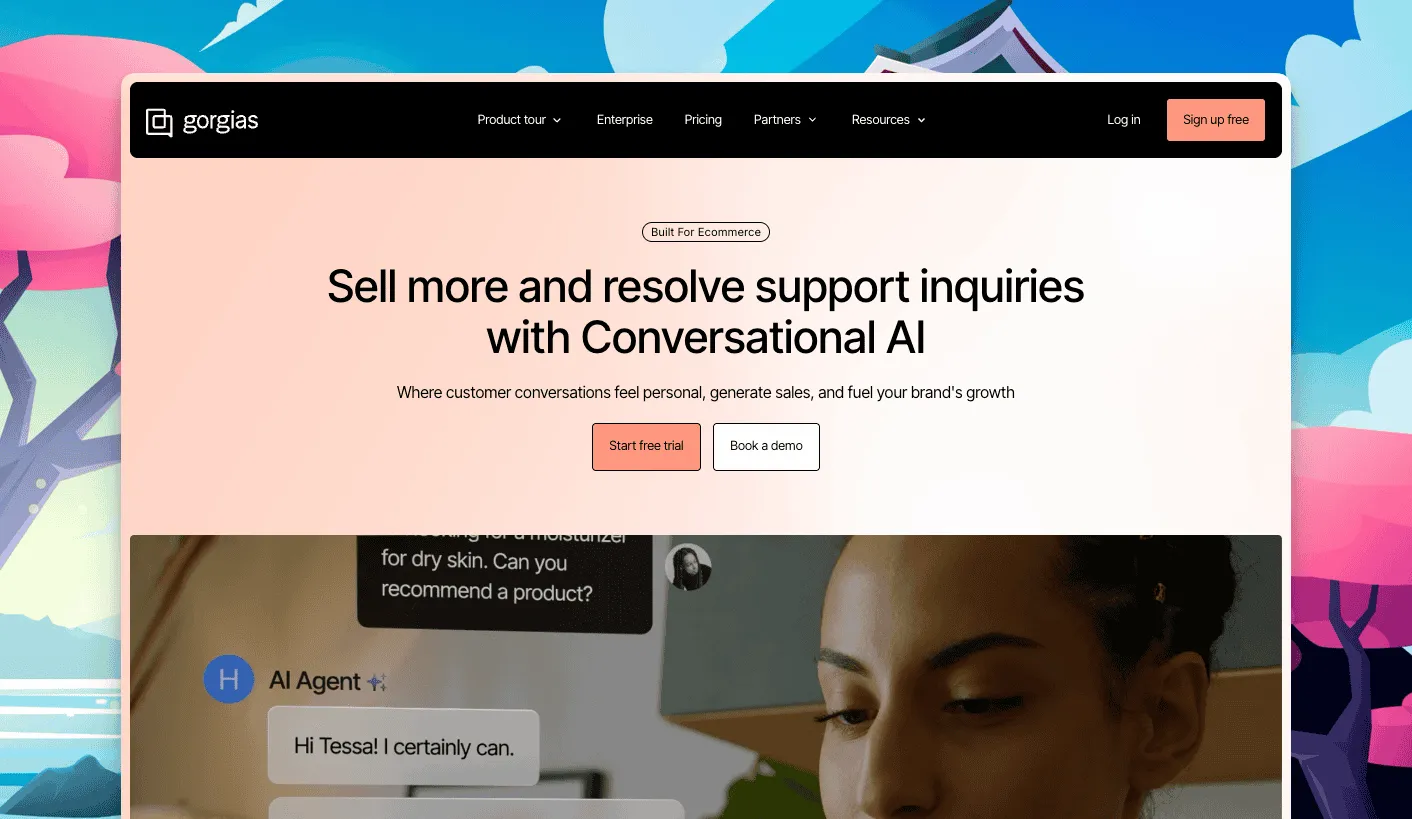
Gorgias answers the question a messaging-first design skips: where’s my order. Agents see the order, edit it and issue a refund from inside the ticket, which is why Shopify stores tend to land here instead of on Intercom.
Top features
- Order edits, refunds and subscription changes from inside the ticket.
- The deepest Shopify integration available, with WooCommerce and BigCommerce also supported.
- Seats aren’t metered past the smallest plan: 500 users from Basic upward.
- AI Agent priced per interaction rather than per seat.
- A 7-day trial to test the order-support workflow before committing.
Why ecommerce teams evaluate it against Intercom
For a Shopify store, it’s a straight upgrade on what a chat-first tool answers. Starter is $10 a month for 50 tickets, Basic $60 for 300, Pro $360 for 2,000, Advanced $900 for 5,000, billed monthly, with roughly 16% off on annual billing. Past the allowance, tickets cost $0.36 to $0.40 each, and AI interactions are metered too, so a good Black Friday still raises the bill. Outside ecommerce, it’s the wrong tool.
3. Tidio: best for chat-first ecommerce stores
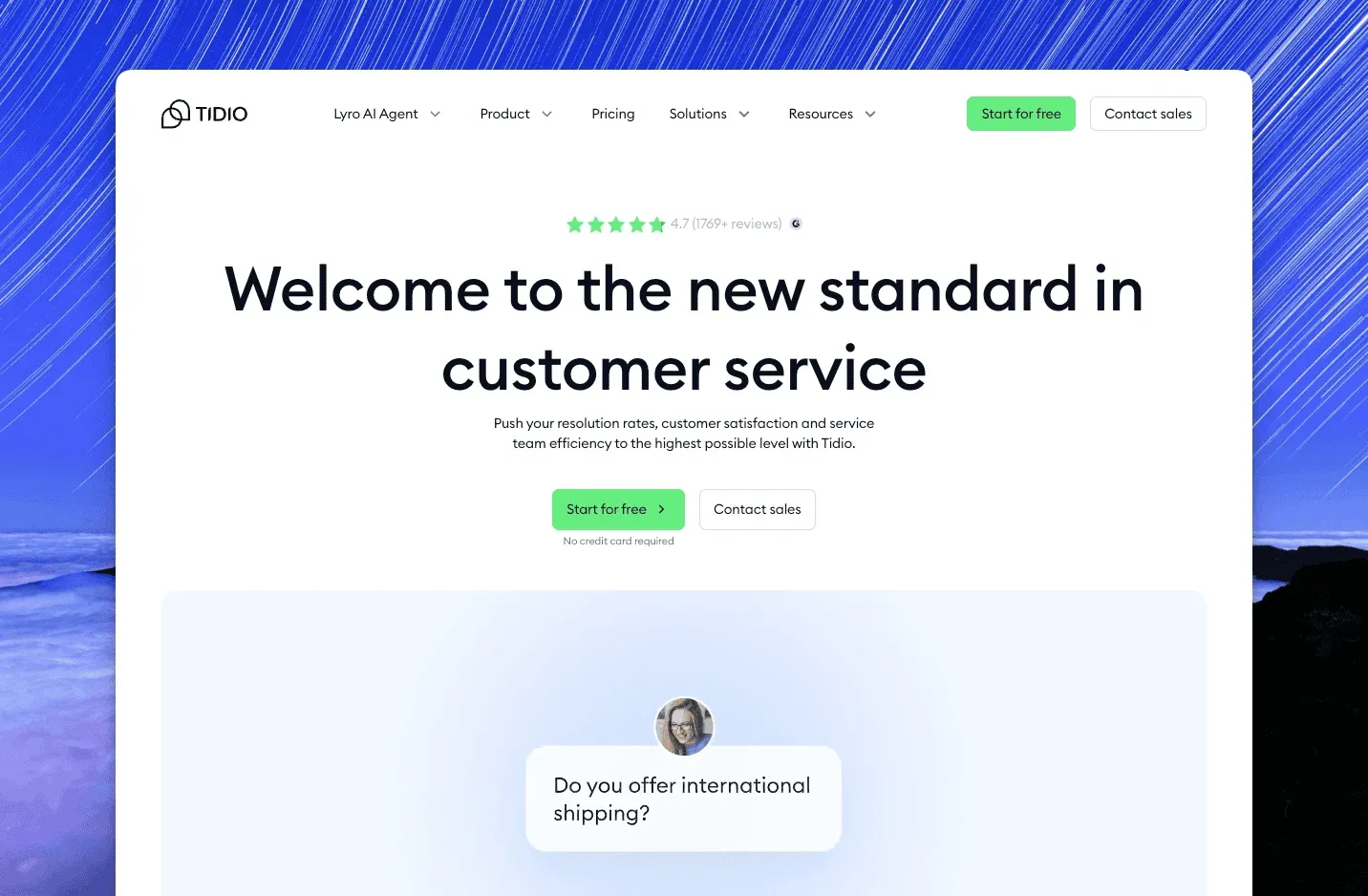
Tidio is a chat and chatbot tool built for online stores, most at home with Shopify, WooCommerce and BigCommerce merchants who want to recover carts and answer product questions from the widget rather than run a full support desk.
Top features
- A free plan that includes live chat, help desk basics and 50 Lyro AI conversations a month.
- Native Shopify, WooCommerce and BigCommerce integrations.
- Pre-built chatbot flows for cart recovery and lead capture.
- 10 operator seats included from the free plan up.
- Annual billing knocks about two months off the price of any paid tier.
Why ecommerce teams evaluate it against Intercom
This is the cheaper, more storefront-native swap. The free plan covers 50 billable conversations a month; Starter is $24.17 for 100, Growth from $49.17. Lyro AI starts at $32.50 a month for 50 conversations on top of a paid plan. What it doesn’t have is Intercom’s automation depth, product tours or a real ticketing system, so it suits a small store’s chat widget more than a scaling support queue.
4. Freshdesk: best for structured ticketing at a lower price
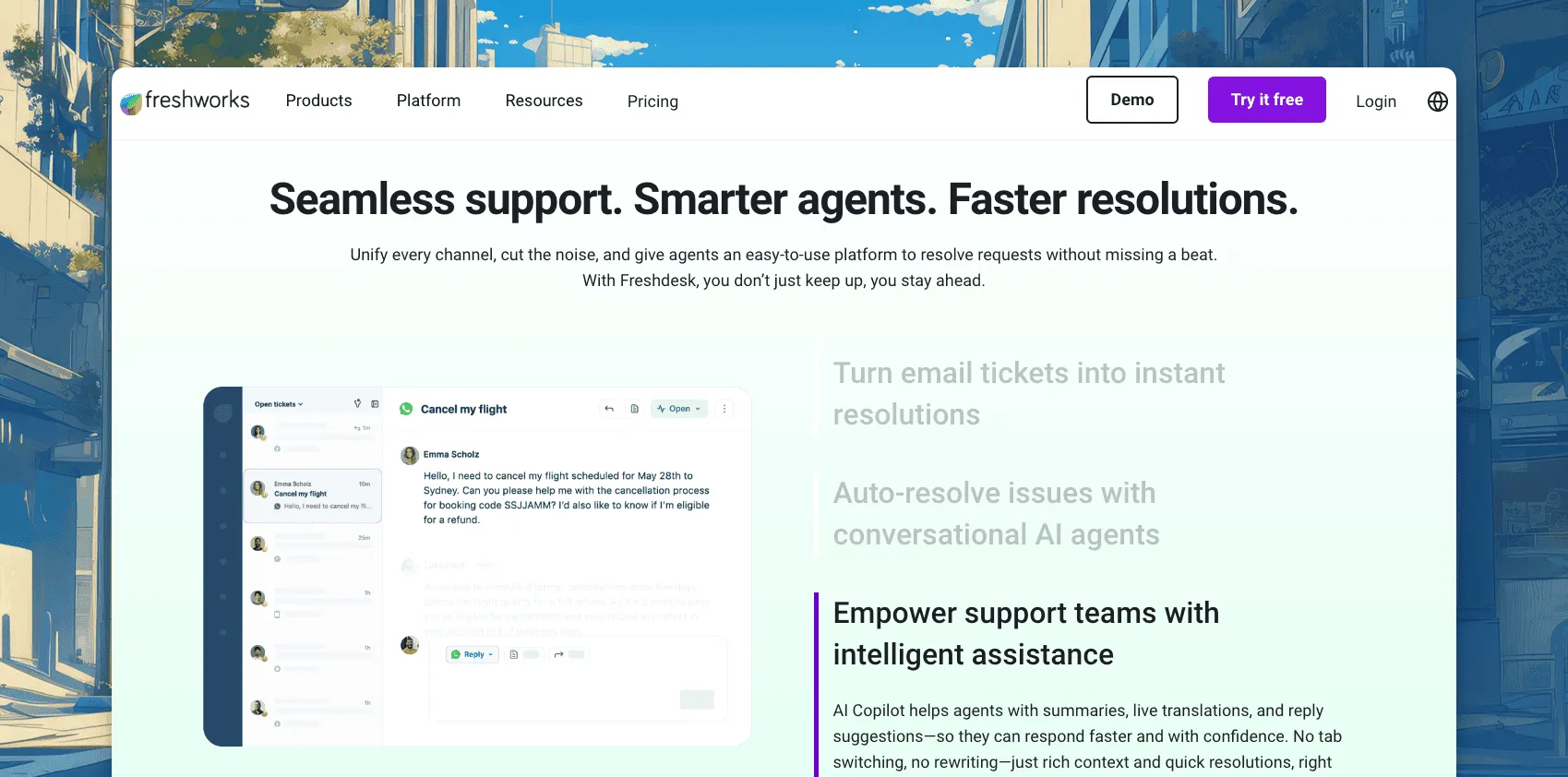
Freshdesk is the ticket-first alternative to Intercom’s conversational inbox: routing rules, SLA policies and a customer portal built around a queue rather than a messenger. It suits a growing store that wants process more than a chat bubble.
Top features
- Ticket views, routing rules and SLA policies that a messaging-first tool doesn’t emphasize.
- A customer-facing knowledge base and portal on every plan, including the free one.
- Freddy AI Agent, with 500 sessions included before it’s $49 per 100 more.
- Freddy AI Copilot for agents at $29 an agent a month, on Pro and Enterprise only.
- A 14-day trial, longer than Intercom’s, before you commit to a plan.
Why ecommerce teams evaluate it against Intercom
It’s the cleaner ticketing system, not a chat replacement. The free program covers 2 agents for six months, then Growth is $19 an agent a month, Pro $55, Enterprise $89, all billed annually. Live chat is Freshchat, a separate product with its own bill, so price the full Freshworks stack if your store needs both. See the full ThriveDesk vs Freshdesk comparison, or the migration guide if you’re leaving Intercom for something more ticket-shaped.
5. Help Scout: best for simple email support
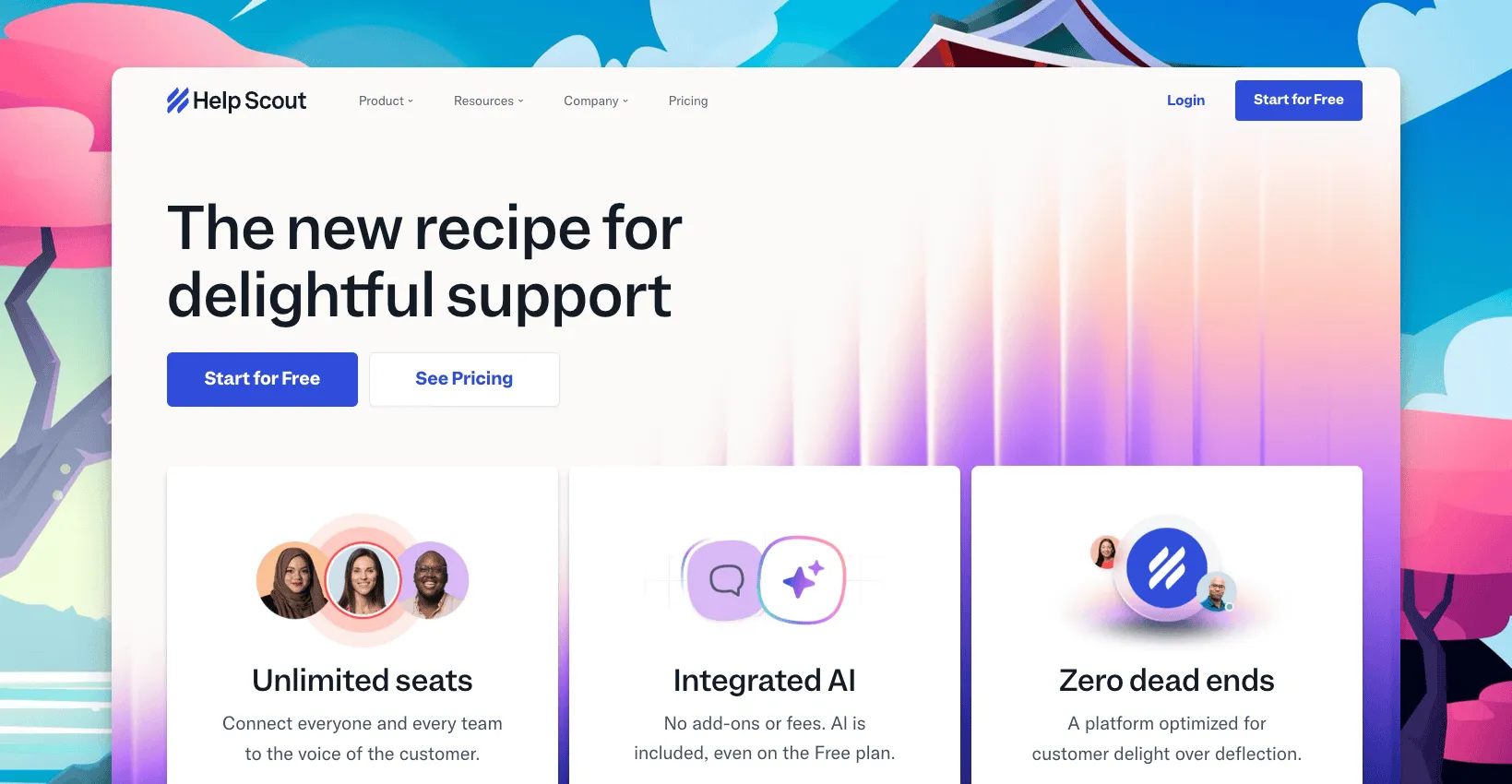
Help Scout drops the messaging layer entirely and keeps support close to email: a shared inbox that looks and feels like a normal mailbox, with a lighter learning curve than Intercom’s targeted messenger.
Top features
- An inbox that reads like email, with collision detection built in.
- Docs, a customer-facing knowledge base, on every plan including free.
- Beacon, a chat widget, is included rather than sold as a separate product.
- AI Answers at $0.75 a resolution after a 3-month trial.
- Full customer history alongside every conversation, without a separate CRM view.
Why ecommerce teams evaluate it against Intercom
For a store that wants less setup than Intercom’s targeting and messaging machinery, this is the calmer option. The free plan covers 5 users, 1 inbox and 100 contacts a month; Standard is $25 a user a month, Plus $45, Pro $75. An extra inbox is $12 a month. Reporting is thinner than Intercom’s and order actions still need a second tab, but the onboarding is lighter too. See ThriveDesk vs Help Scout, or the migration guide.
6. Zendesk: best for enterprise reporting and scale
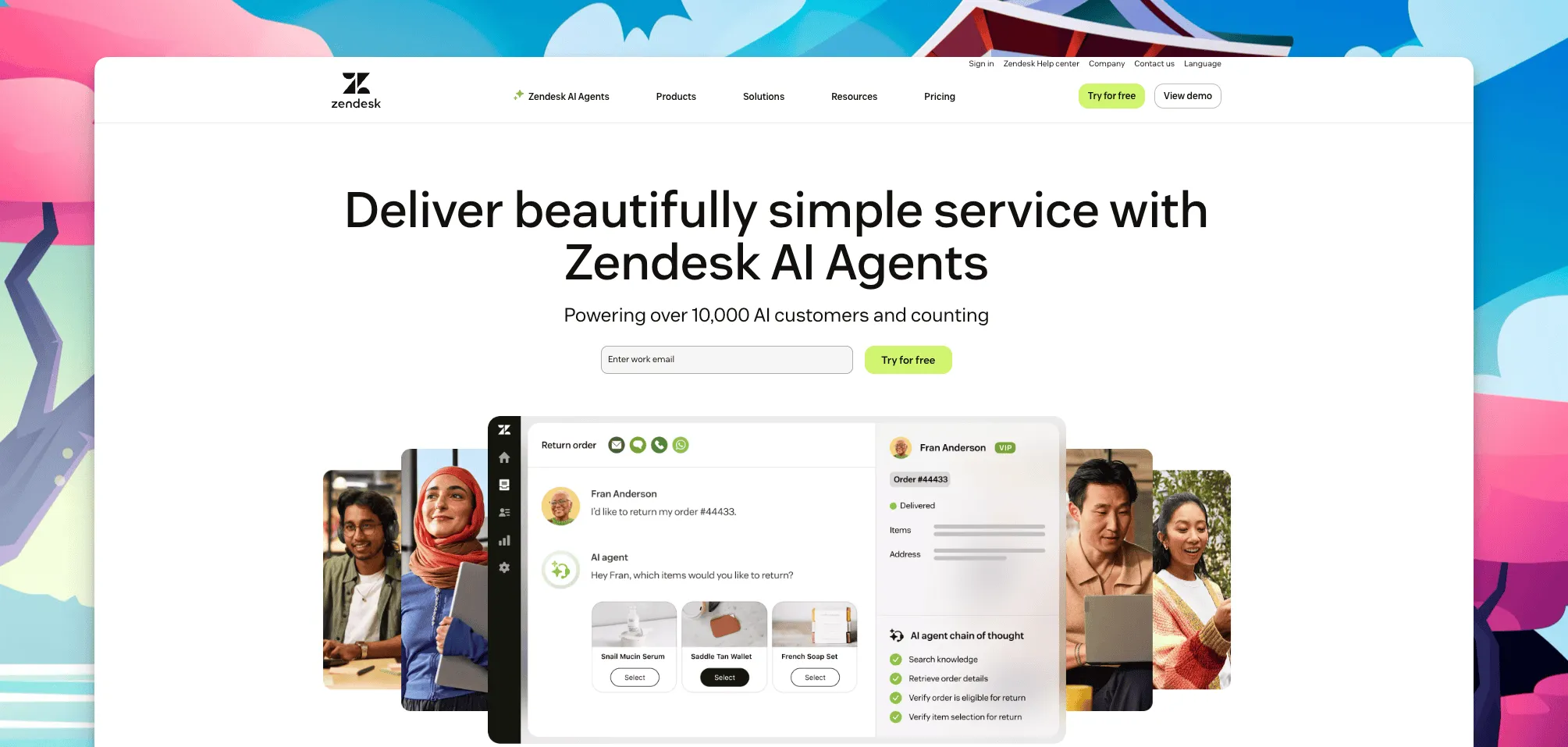
Zendesk is the enterprise default: deep reporting, a large integration marketplace and multichannel support that goes past chat into voice and social. G2 rates it 4.3 out of 5. It’s the pick once procurement, compliance and multibrand routing matter as much as the agent experience.
Top features
- Suite plans that bundle ticketing, chat, voice and a help center in one contract.
- An extensive app marketplace and API for custom workflows.
- Advanced dashboards built for reporting to people who aren’t in the queue daily.
- Copilot AI at $50 an agent a month.
- Social and SMS channels alongside email, chat and phone, in the same workspace.
Why ecommerce teams evaluate it against Intercom
It trades Intercom’s messaging polish for reporting depth and channel breadth. Support Team is $19 an agent a month, Suite Team $55, Suite Professional $115, all billed annually, and Suite Enterprise is quote-based. Copilot adds $50 an agent a month on top of whichever tier you’re on. That’s more administration than most single-brand stores need, and a seasonal hire is a full license either way. For a retailer running several brands or regions, the reporting depth is often worth the weight. See ThriveDesk vs Zendesk.
How to choose the right Intercom alternative for your store
- Choose ThriveDesk when a growing WooCommerce or SureCart store needs chat, a help desk, order context and predictable plan pricing without a per-resolution meter.
- Choose Gorgias when Shopify order edits and refunds must happen inside the ticket.
- Choose Tidio when storefront chat and quick automation matter more than a full help desk.
- Choose Freshdesk when ticketing structure matters but Intercom’s seat-and-AI math feels too open-ended.
- Choose Help Scout for a simple, email-first workflow with less administration.
- Choose Zendesk when multibrand routing or enterprise compliance justify the extra weight and cost.
Put your seat count and expected AI volume into the help desk cost calculator before you commit, using your peak sales month rather than a quiet one. Per-seat and per-resolution pricing cross over at different volumes, and the tool that looks cheapest at three seats isn’t always cheapest at ten once AI usage and add-ons are counted.
Why ecommerce teams choose ThriveDesk over Intercom
Teams leave Intercom for the same reason they picked it: they wanted the chat, the automation and the polish. What changes once the bill lands is what a store would trade for order context and a flat number.
One flat price instead of a resolution meter. Neo answers customers and Copilot drafts and summarizes for agents on every ThriveDesk plan, at no extra charge per resolution, so there’s no $0.99-per-outcome math to run before a launch or a sale.
The order is in the conversation. Connect WooCommerce, Shopify, SureCart, Stripe or Paddle and the agent sees the purchase, subscription or payment next to the message, something a messaging-first tool like Intercom was never built to show.
Customers find the answer before they ask. The help center sits inside the chat widget with AI search, so the shipping and return questions Fin would otherwise bill you to resolve get answered before they become a conversation at all.
A seasonal hire doesn’t move the bill. Three flat plans mean a busy quarter doesn’t turn into a per-seat or per-resolution surprise the way it can on Intercom.
The price is the price. Basic is $29 a month, Standard $69, and Unlimited is $129 with unlimited teammates, and Neo and support are included on all three. If you’re moving off Intercom, the migration is free and done for you; the migration guide covers the steps, and ThriveDesk vs Intercom puts the two side by side on price and AI costs.
ThriveDesk isn’t the right replacement for every store. Stay with Intercom when in-app messaging and product tours across a logged-in app matter as much as order support, and compare Zendesk when multibrand routing justifies the extra weight. For a lean WooCommerce or SureCart team, the migration guide above is the faster way to find out.