Freshdesk’s free program covers 2 agents for six months, then Growth is $19 an agent a month billed annually. Live chat isn’t included: it’s Freshchat, a separate product with its own bill starting at $19 an agent too. Want Freddy AI Copilot on top? That’s $29 an agent a month, and only on Pro or Enterprise, so the ticket tool you bought to keep support simple turns into three subscriptions before the chat widget even loads. A store adding seasonal agents for peak volume pays for each one across every product it has stacked.
The best Freshdesk alternatives for ecommerce in 2026 are: 1) ThriveDesk, for one flat bill with help desk, chat and order data in it; 2) Crisp, for per-workspace pricing that doesn’t move with a seasonal hire; 3) Help Scout, for a plain, email-style inbox; 4) GrooveHQ, for a simple, small-team shared inbox; and 5) Zendesk, for stores that have outgrown single-brand ticketing.
We compared each option on store-platform fit, order context, self-service, how the bill moves during a peak sales month, and migration effort. Every price below was checked on the vendor’s pricing page in August 2026.
What Freshdesk does well, and where it hurts
Freshdesk is one of the most established ticketing systems on the market: routing rules, SLAs, a knowledge base and automation, sold in tiers that scale from a real free program to enterprise. It’s part of the wider Freshworks family, alongside Freshchat, Freshcaller and a CRM, each sold as its own product. G2 rates it 4.4, and the recurring theme in reviews is that the ticketing core is solid while the surrounding suite is where the bill gets complicated.
Top features
- Ticket views, routing rules and SLA policies across every paid tier.
- A customer-facing knowledge base and portal included from Growth up.
- Automation for routing, assignment and canned responses.
- A free program for 2 agents, for teams just starting out.
- A 14-day trial on the paid tiers before you commit to a plan.
Pricing
The free program covers 2 agents for six months. Growth is $19 an agent a month billed annually, or $23 monthly. Pro is $55 annual, $66 monthly, and Enterprise is $89 annual, $107 monthly. Freddy AI Agent includes 500 sessions, then $49 per 100 more once a busy month runs past the allowance. Freddy AI Copilot is $29 an agent a month, on Pro and Enterprise only. There’s a 14-day trial to test the ticketing before you commit. Live chat is Freshchat, sold separately with its own tiers.
Why ecommerce teams look elsewhere
- The ticketing is genuinely good, but it’s one product in a family. Live chat, phone and full omnichannel each arrive as a separate Freshworks purchase with its own bill and its own login.
- The free program is generous for six months, then it isn’t. Two agents past that window means picking a paid tier, even for a store that hasn’t grown much at all.
- AI has two separate meters. Freddy AI Agent runs through its 500 included sessions fast during a sale, and Copilot for agents is a second charge on top, restricted to the higher tiers.
- Every seasonal hire is a full agent license. A five-person team that adds three temporary agents for peak season pays for all eight across whichever Freshworks products it uses.
- There’s no store or subscription data inside the ticket. Order and billing questions still mean a second tab open beside the queue, copying numbers back and forth.
Quick comparison of Freshdesk alternatives for ecommerce
The table uses each vendor’s cheapest relevant paid plan. Pricing units differ, so compare your real seat count and peak-season volume rather than the starting number alone.
| Tool | Core strength | Starting price | Best for | Main trade-off | G2 rating |
|---|---|---|---|---|---|
| ThriveDesk | Store-aware help desk; Neo AI agent in every plan, no per-resolution fee | $29 a month, flat | Growing WooCommerce and SureCart stores | No native voice channel | 4.9 |
| Crisp | One price per workspace | $45 a month per workspace | Small teams that hire seasonally | Lighter ticketing depth | n/a |
| Help Scout | Simple email-first shared inbox | $25 a user a month | Lean email support teams | Limited ecommerce actions | 4.4 |
| GrooveHQ | Plain, small-team shared inbox | Per agent, price not published | Very small teams | Little automation or self-service | n/a |
| Zendesk | Enterprise reporting and scale | $19 an agent a month | Multibrand or multiregion stores | Per-agent cost climbs fast | 4.3 |
How we evaluated
We evaluated each product as a lean ecommerce team would. The tool had to turn storefront questions into owned work, support self-service, and remain manageable without a full-time administrator. We also checked store-platform fit, what survives a Freshdesk migration, and how each pricing model behaves during a peak sales month, since per-agent and per-workspace pricing move very differently once seasonal seats are added.
Migration scored more than the presence of an importer: we looked at what happens to tags, attachments and ticket history. A low starting price means little if every new agent adds another charge, or if the switch creates weeks of cleanup during a busy season. Where a vendor doesn’t publish current pricing, we said so instead of reusing an old number.
1. ThriveDesk: one flat bill for growing ecommerce teams
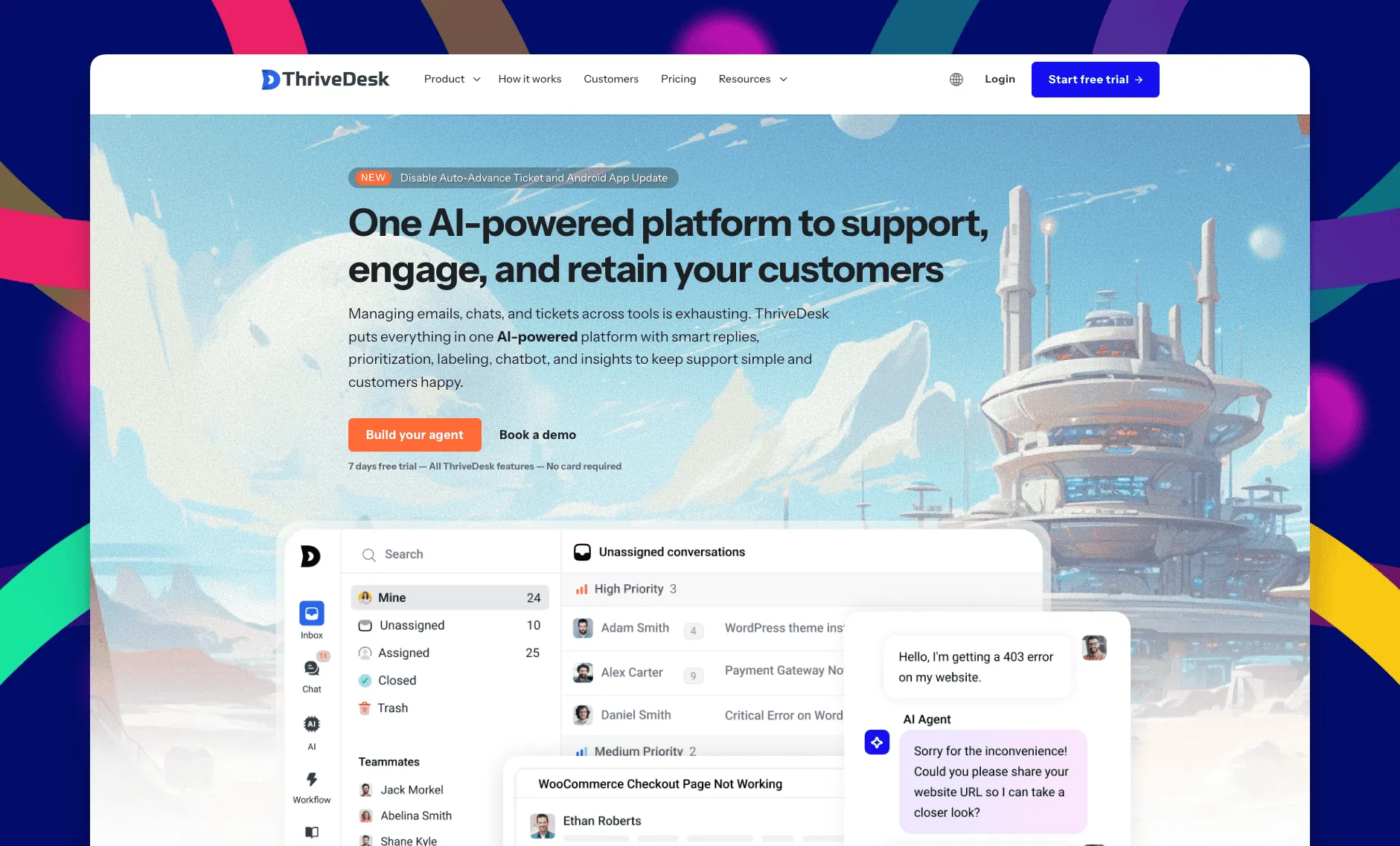
ThriveDesk is AI customer service software for ecommerce: an agentic omnichannel helpdesk, intelligent chatbot, modern help center and powerful reporting, plus Neo, the AI agent that answers customers around the clock. It’s built for small support teams at online stores and SaaS companies that want ticketing, live chat and order context without assembling them from separate Freshworks-style products, and it prices the whole thing per plan rather than per agent. Here’s what each part does.
A shared inbox with clear ownership
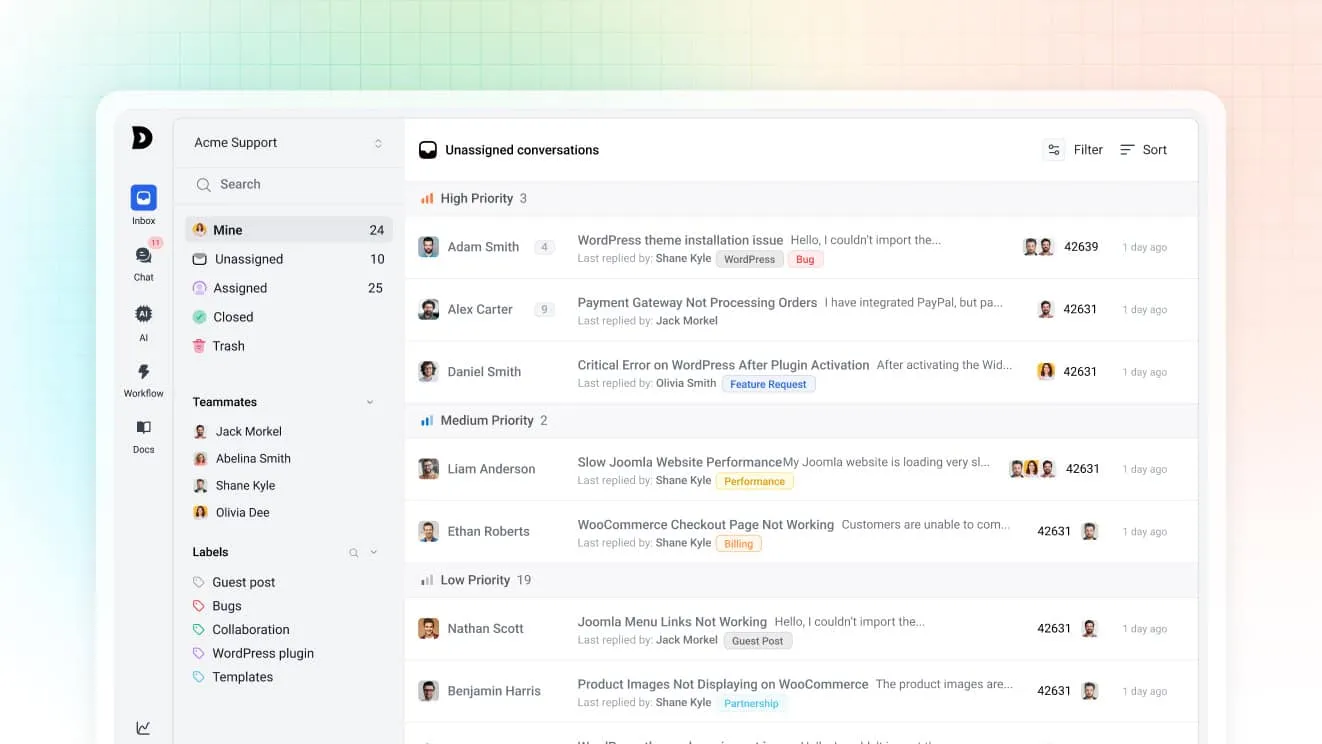
Email, chat and the contact form land in one queue, and the team works it together instead of forwarding threads by hand. Collision detection shows who’s already replying, so two people never answer the same customer. Assignment rules route by tag, subject or priority, saved replies keep the common answers consistent, and custom views give each agent a filtered inbox by status, tag or assignee. That structure holds up during a seasonal peak. Managers can separate delivery issues and refund questions into their own views, then add extra teammates without redesigning the queue.
Neo does the repetitive part, with no separate AI product to buy
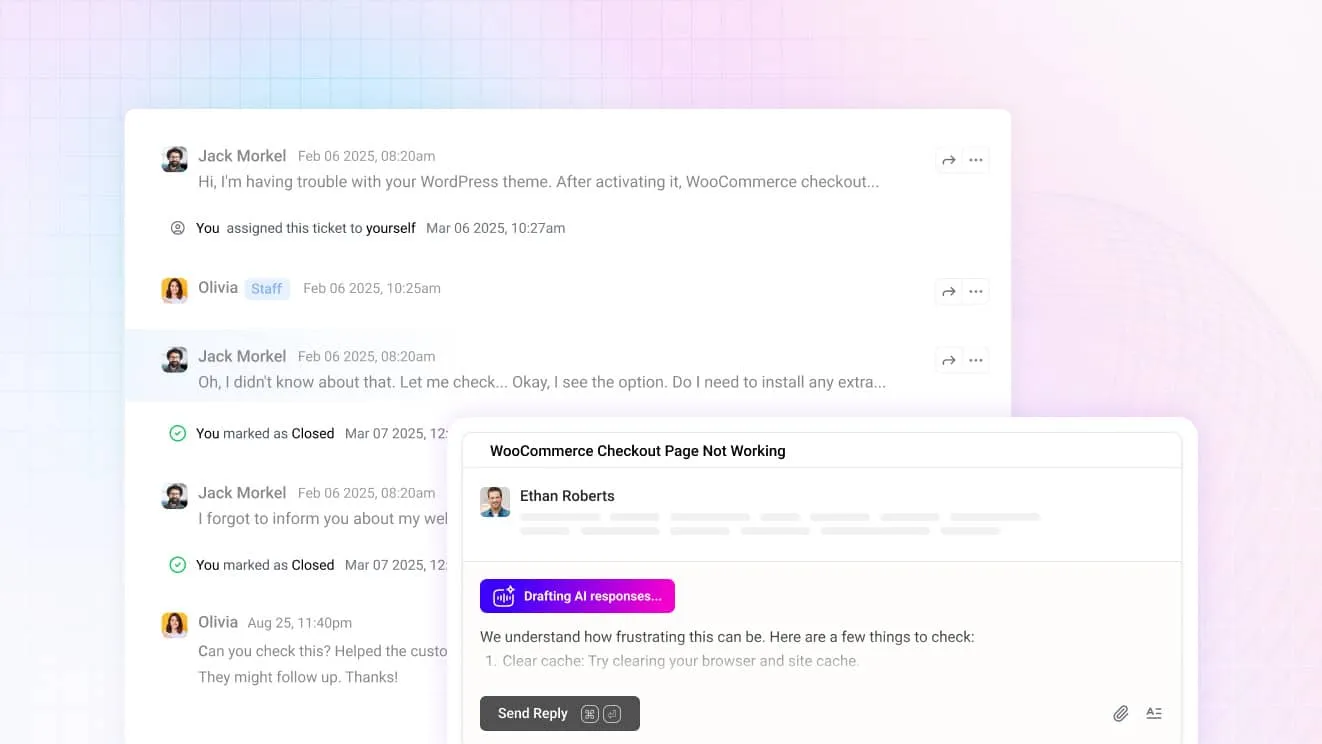
Neo is the AI agent on every plan, with no per-resolution fee and no add-on required to turn it on. It answers the common questions on its own. For your team, Copilot drafts replies you can send or edit, summarizes a long thread before you read it, and rewrites a message to be shorter or friendlier. Workflow rules handle the tagging, routing and follow-ups around it, so the automation Freshdesk spreads across two products lives in one place here. Nothing here needs a second subscription during a busy month.
One widget for chat, forms, orders and articles
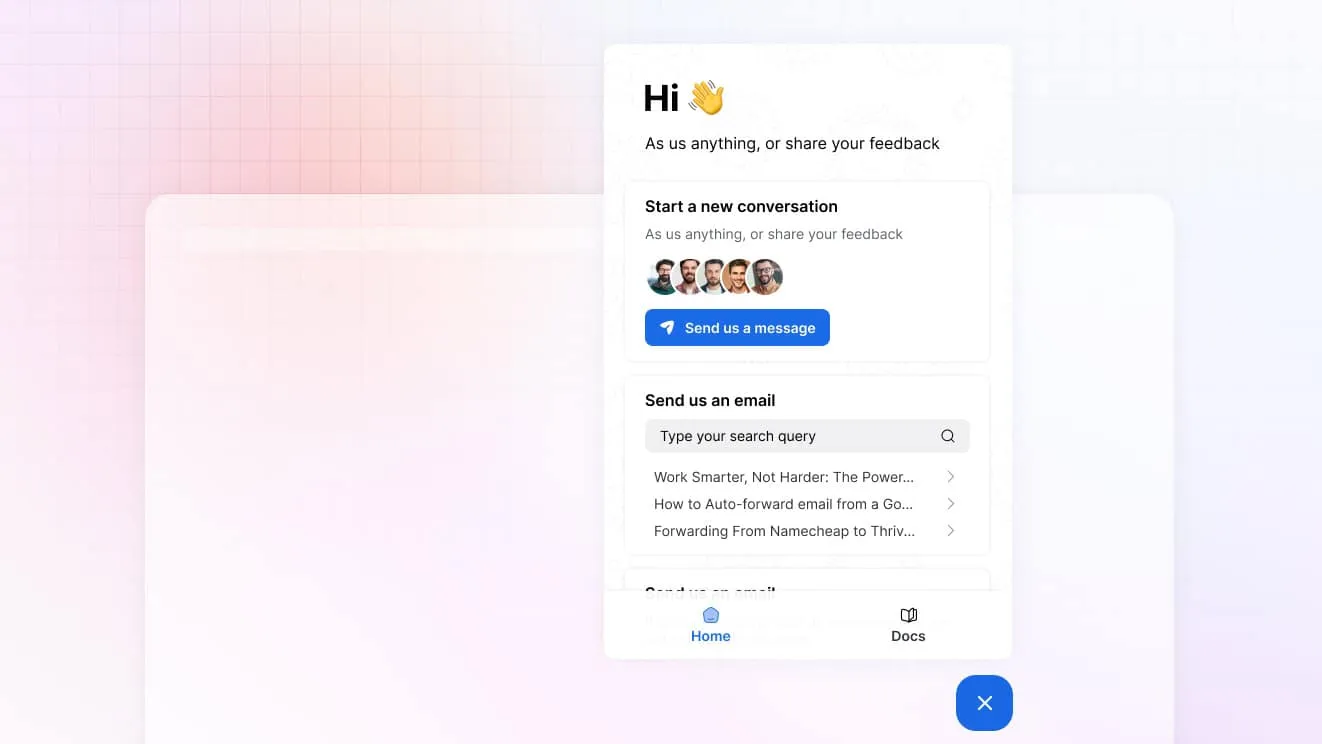
The chat widget covers what a separate chat product would cost extra for, and more. Customers can chat with Neo or a person, send a message through the contact form, look up an order without asking anyone, and search the help center, all from the same bubble on the same bill. It runs on the same site as the store, so nobody has to leave the page to get an answer.
Store and billing data inside the conversation
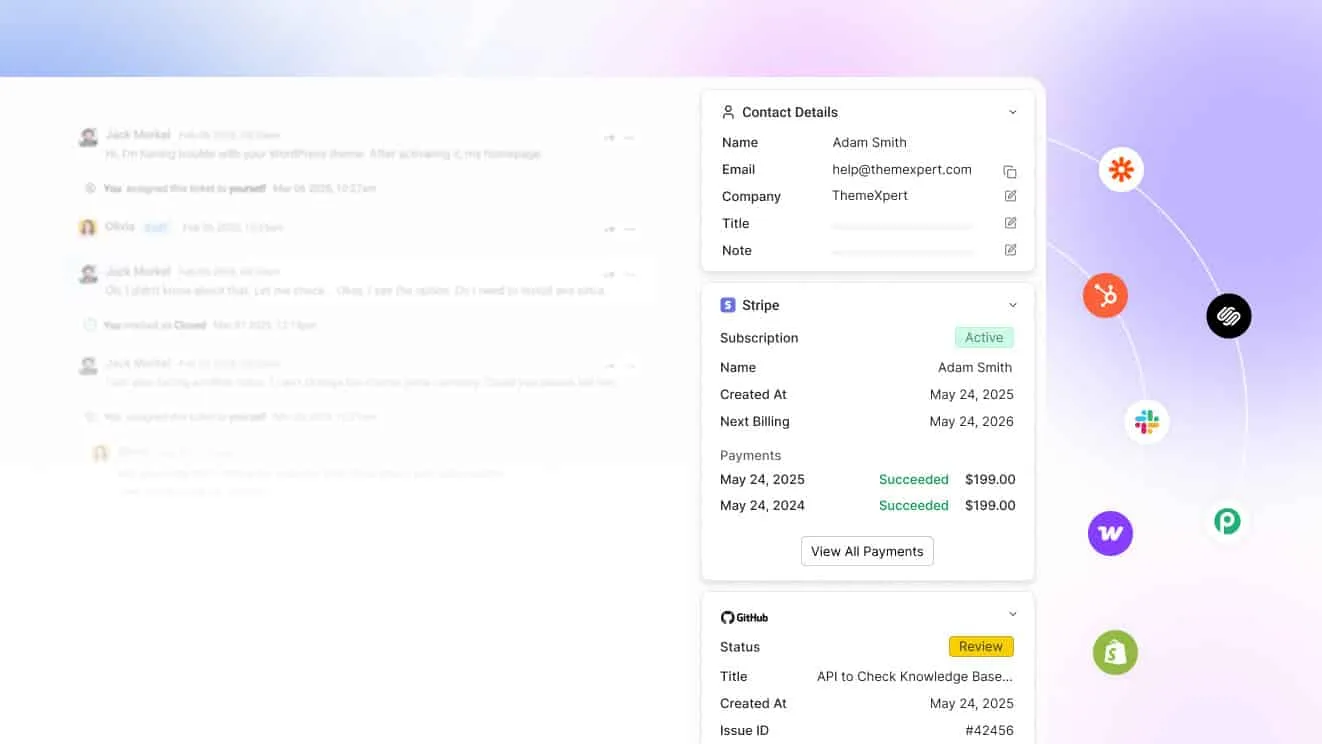
Connect WooCommerce, Shopify, SureCart, Stripe or Paddle and the customer’s orders, subscriptions and payments show next to the message. Agents can update an order or check a refund from the reply instead of opening another tab, and Neo can answer a status question on its own once the order is connected.
A help center that takes questions off the queue
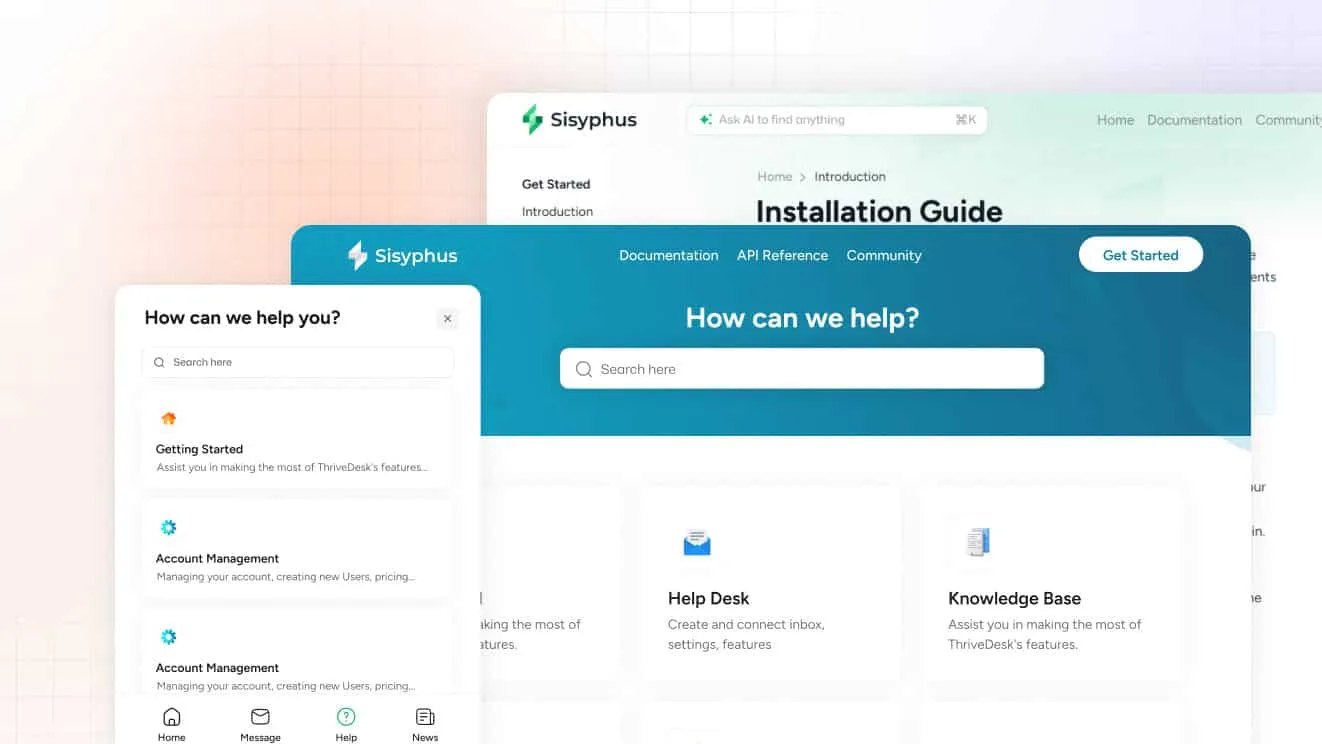
The help center is a knowledge base with a block editor, AI help for first drafts, and AI search that works inside the widget too. It’s built into the same plan rather than gated behind a higher Freshdesk tier, and the article count grows while the ticket count doesn’t. Categories keep shipping times, return policy and product documentation in separate sections without splitting the workspace in two.
What it costs
Basic is $29 a month for 2 teammates and 1 inbox, Standard is $69 for 5 teammates and 2 inboxes, and Unlimited is $129 for unlimited teammates and 5 inboxes. Annual billing takes those to $19, $49 and $99. Every plan includes Neo and support, with no per-agent add-ons. The trial is 7 days, no card required.
Why ecommerce teams evaluate ThriveDesk against Freshdesk
- One bill instead of three. Ticketing, chat and AI are already in the plan, with nothing to add from a separate product family.
- The AI doesn’t need its own purchase. Neo answers routine questions and Copilot handles drafts and summaries on every plan, without a per-agent add-on.
- A seasonal hire doesn’t change the plan. Three flat plans from day one, with unlimited teammates on the top tier instead of a per-agent count that climbs at peak season.
- The order is part of the reply. Store and billing data sit next to the message, so an agent doesn’t need a second app open to answer a status question.
2. Crisp: best for per-workspace pricing
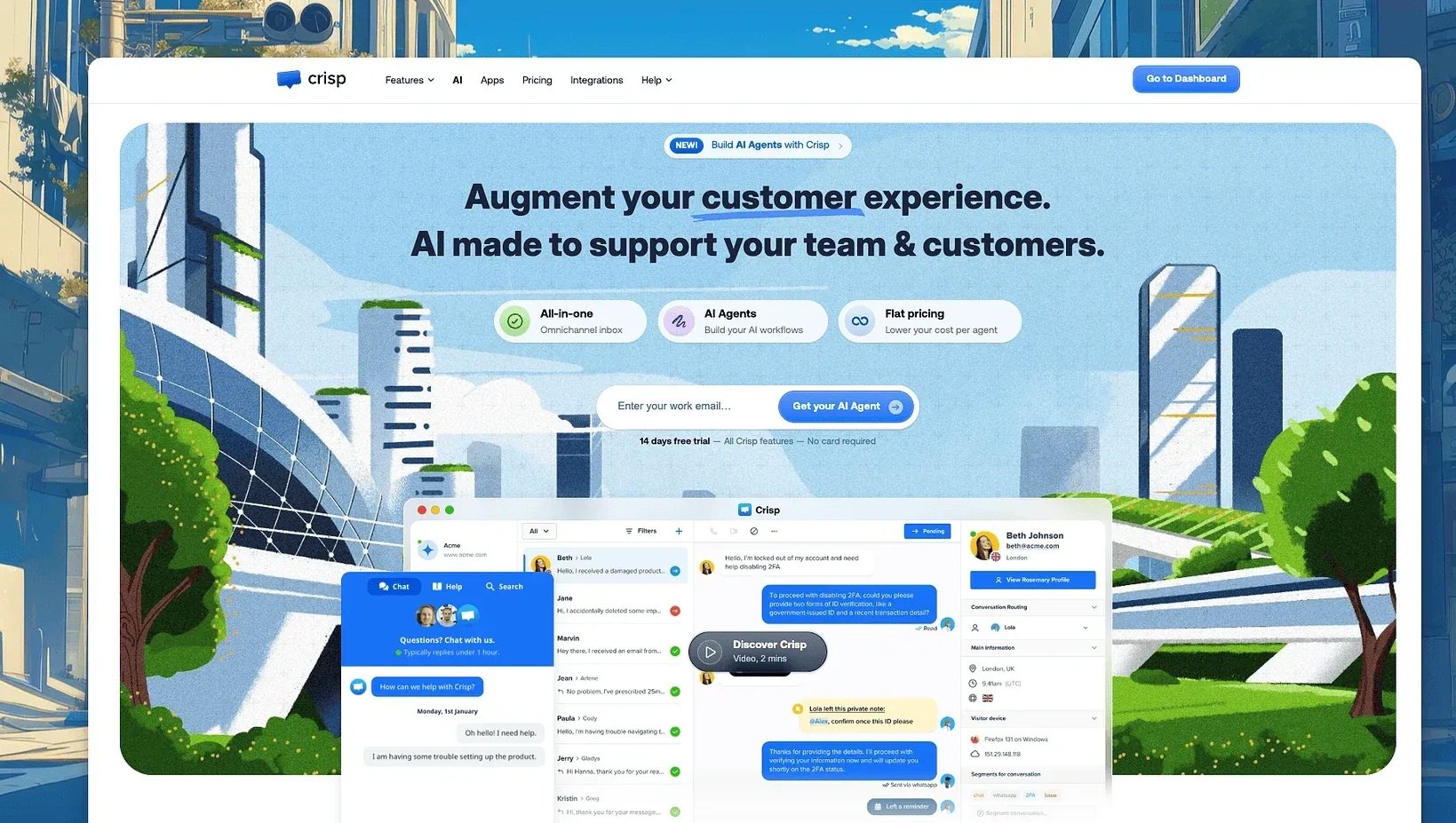
Crisp flips Freshdesk’s per-agent model: one price per workspace, with seats included, aimed at small teams that would rather not count heads every time they hire. It started as a live chat tool and still feels like one, with ticketing and a knowledge base layered on afterward.
Top features
- One price per workspace, with seats bundled in rather than metered.
- A live chat widget with chatbots, canned replies and drip campaigns.
- Unlimited conversations on every plan, including the free one.
- A lighter ticketing and knowledge base layer than a dedicated help desk.
- AI credits bundled into each paid tier rather than billed separately.
Why ecommerce teams evaluate it against Freshdesk
Once headcount stops mattering to the bill, this is the cheapest way to staff up for peak season. The free plan covers 2 seats and unlimited conversations. Mini is $45 a month per workspace for 4 seats, Essentials $95 for 10 seats. There’s a 14-day trial on the paid tiers. What it doesn’t have is Freshdesk’s ticketing depth or SLA policies, so it suits a chat-first team more than a queue-heavy one during a long peak season.
3. Help Scout: best for a plain, email-style inbox
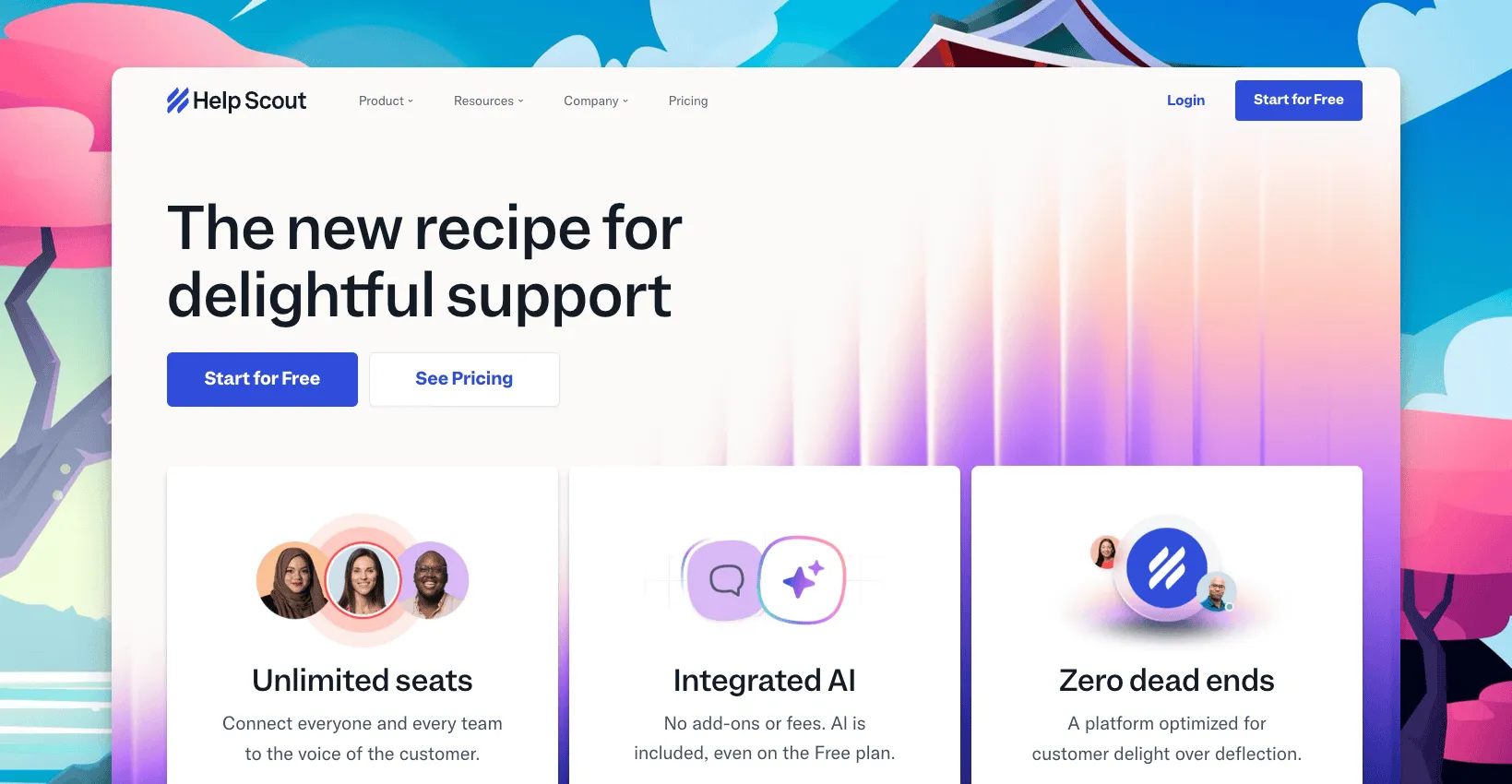
Help Scout trades Freshdesk’s ticket-and-portal structure for something closer to email: a shared inbox with a lighter learning curve and less configuration to get right on day one.
Top features
- An inbox that reads like email, with collision detection built in.
- Docs, a customer-facing knowledge base, on every plan including free.
- Beacon, a chat widget, included rather than sold as a separate product.
- AI Answers at $0.75 a resolution after a 3-month trial.
- Full customer history alongside every conversation.
Why ecommerce teams evaluate it against Freshdesk
For a team that wants less setup than Freshdesk’s automation and SLA machinery, this is the calmer option overall. The free plan covers 5 users, 1 inbox and 100 contacts a month. Standard is $25 a user a month, Plus $45, Pro $75, and an extra inbox is $12 a month on any of them. Reporting is thinner than Freshdesk’s, and order actions still need a second tab, but the onboarding is lighter too. See ThriveDesk vs Help Scout, or the migration guide.
4. GrooveHQ: best for a simple, small-team inbox
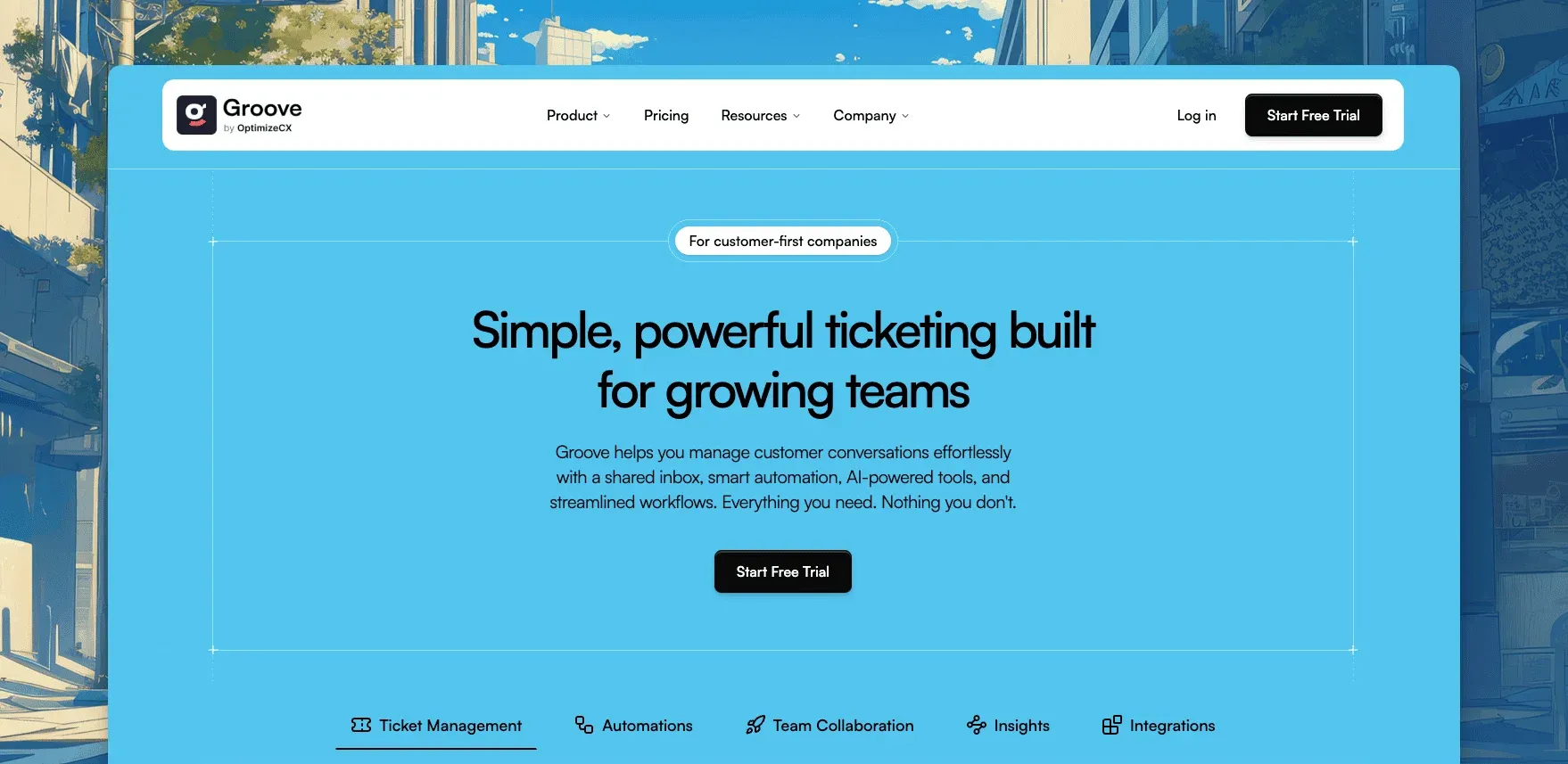
Groove positions itself as the anti-Zendesk: a shared inbox and lightweight ticketing for small teams that don’t want an enterprise setup or a family of connected products. It’s the plainest tool on this list, closer to a shared email account than a full help desk.
Top features
- A shared inbox built around collaboration rather than deep ticketing structure.
- Basic automation, tags and reporting sized for a small team.
- Per-agent pricing across a few tiers, without Freshdesk’s separate-product stacking.
- A simpler settings surface than a full Freshworks-style suite.
- Email and a shared inbox as the core channel, with no phone or SMS add-on to configure.
Why ecommerce teams evaluate it against Freshdesk
There’s no family of connected products behind it, just a shared inbox. Groove doesn’t publish current plan pricing the way the rest of this list does. Confirm numbers directly with the vendor before you commit. It’s billed per agent rather than assembled from several purchases, which is at least simpler math. What you give up is the automation depth, reporting, store data and AI tooling that come standard on ThriveDesk or Freshdesk’s higher tiers.
5. Zendesk: best for enterprise reporting and scale
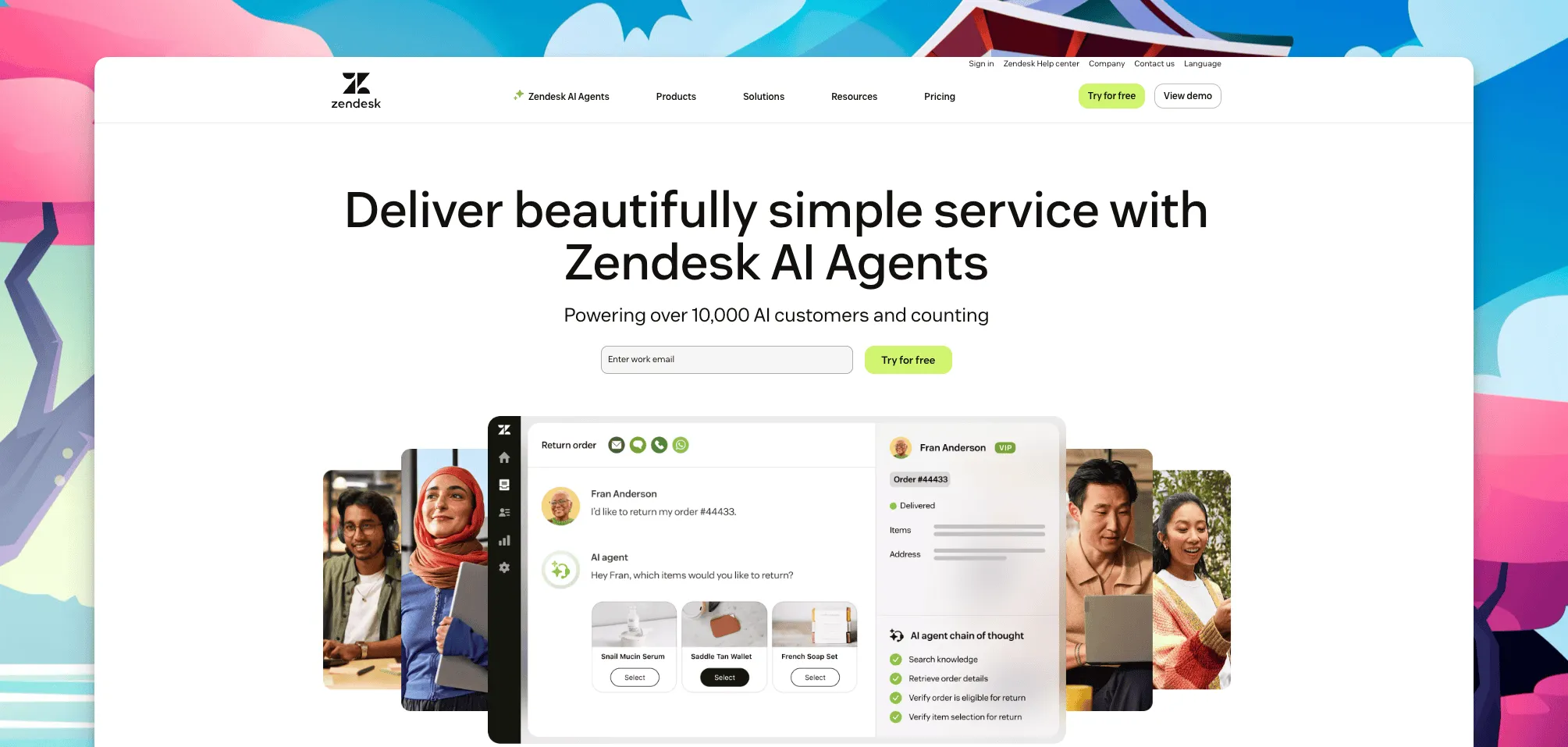
Zendesk is the heavier option one step up from Freshdesk: deeper reporting, a larger integration marketplace and multichannel support that goes past chat into voice and social. G2 rates it 4.3, and it’s the pick once a store runs several brands or regions and procurement matters as much as the agent experience.
Top features
- Suite plans bundling ticketing, chat, voice and a help center in one contract.
- An extensive app marketplace and API for custom workflows.
- Advanced dashboards built for reporting to people outside the queue.
- Copilot AI at $50 an agent a month.
- Multichannel coverage across email, chat, phone, social and SMS.
Why ecommerce teams evaluate it against Freshdesk
Reporting steps up here, and so does the price. Support Team is $19 an agent a month, Suite Team $55, Suite Professional $115, all billed annually, and Suite Enterprise is quote-based. Copilot adds $50 an agent a month on top of whichever tier you’re on. That’s more administration than a single-storefront team usually needs. A seasonal hire is a full license either way, whichever tier you’re on. For a retailer running several brands, the reporting depth is often worth it.
How to choose the right Freshdesk alternative for your store
- Choose ThriveDesk when a growing WooCommerce or SureCart store needs one flat bill for ticketing, chat and order context.
- Choose Crisp when a workspace price that doesn’t move with a seasonal hire matters more than ticketing depth.
- Choose Help Scout for a plainer, email-first workflow with less administration.
- Choose GrooveHQ when the team just wants the simplest possible shared inbox.
- Choose Zendesk when multiple brands, regions or compliance needs justify the extra weight and cost.
Put your agent count and expected peak-season volume into the help desk cost calculator before you commit. A per-agent price that looks cheap at two people rarely stays cheap once a busy quarter adds three more, and a per-workspace price can flip the comparison entirely once headcount changes seasonally.
Why ecommerce teams choose ThriveDesk over Freshdesk
Teams choose Freshdesk for its ticketing, then discover the rest of the Freshworks family has its own price tag. Here’s what changes with ThriveDesk.
One flat bill instead of three. ThriveDesk puts the shared inbox, live chat and knowledge base in a single plan, with nothing sold separately the way Freshchat and Freddy Copilot are. One login, one invoice, one place to check when something breaks.
Neo is already in the price. ThriveDesk’s AI agent answers routine questions, and Copilot drafts replies and summarizes threads for your team, on every plan, with no per-agent add-on required to turn it on.
The order is in the conversation. Connect WooCommerce, SureCart, Stripe or Paddle and the agent sees the purchase next to the message, instead of opening a second tab to check it.
Customers find the answer first. The help center sits inside the chat widget with AI search, so the shipping and return questions that would otherwise become a ticket get answered before they do.
A seasonal hire doesn’t move the bill. Three flat plans mean a Black Friday quarter doesn’t turn into a per-agent surprise the way it can on Freshdesk or Zendesk.
The price doesn’t expire. Basic is $29 a month, Standard $69, and Unlimited is $129 with unlimited teammates, with no six-month free window that turns into a bill later. Free, done-for-you migration from Freshdesk is coming soon, and ThriveDesk vs Freshdesk puts the two side by side on price.
ThriveDesk isn’t the right replacement for every store. Stay with Freshdesk or move up to Zendesk when several brands, regions or strict SLAs justify the administration. For a lean WooCommerce or SureCart team, the 7-day trial is the faster way to find out.